You want to feel good when you travel, especially on long flights. Compression socks for travel are an easy way to protect your legs and make you more comfortable. Almost all travelers—about 97%—notice their legs swell during flights longer than seven hours. You can stop that pain by wearing compression socks. They use gentle pressure to help blood flow, lower swelling, and cut your risk of blood clots. Many people think compression socks are just for older adults or people with health problems, but they help everyone. Here are some common myths:
-
Compression socks are only for older people. But really, they help all travelers.
-
Compression socks are uncomfortable. Newer compression socks for travel are made to be soft and let your skin breathe.
-
Regular socks work just as well. Only compression socks give the right support for blood flow.
-
Only long flights need them. Compression socks help any time you sit for a long time, like on road trips.
Compression socks for travel keep your legs full of energy, healthy, and comfortable from takeoff to landing.
Key Takeaways
-
Compression socks can help stop your legs from swelling on long flights. This makes traveling feel better. - Wearing compression socks can lower your chance of getting blood clots. This is very important on flights that last more than four hours. - Pick the right compression level, like 20-30 mmHg, for the best support and comfort when you travel. - Choose socks made from materials that let air in. This helps keep your legs cool and dry during your trip. - Try to wear compression socks every time you travel. This can help your legs stay healthy and make you feel more comfortable.
Travel and Circulation

Effects of Long Flights
You spend hours sitting for long periods on flights. This can hurt your legs and make you feel tired. When you stay still, your blood flow slows down. Your legs can swell, and you might feel pain or numbness. Many travelers notice cramped and swollen feet, cold toes, or even a pins and needles feeling. These are all signs of poor circulation. Some people even get deep pain in the calf or thigh, swelling, or warmth in the leg.
Tip: Move your feet and stretch your legs during flights to help your blood flow.
Clinical studies show that sitting for long periods, especially on long flights, can cause real changes in your legs. Here is what happens:
|
Findings |
Description |
|---|---|
|
Edema |
Prolonged sitting for 8 hours causes swelling in the lower limbs. |
|
Arterial Blood Flow |
Blood flow in the arteries drops after 8 hours of sitting. |
|
Microcirculation |
Muscles in your legs get less oxygen because small blood vessels slow down. |
|
Oxygen Dynamics |
Oxygen levels in your leg muscles decrease with long flights. |
Long flights, especially those over four hours, can increase your risk of blood clots. You may face a four times higher chance of developing deep vein thrombosis. This happens because you do not move much and you can get dehydrated.
Why Circulation Matters
You need healthy circulation to keep your legs safe during travel. When you sit for long periods, blood can pool in your veins. This raises your risk of deep vein thrombosis and other problems. Poor circulation can cause swelling, numbness, and pain.
-
Long hours of sitting, cabin pressure changes, and dehydration all hurt your blood flow.
-
Blood can slow down and pool in your legs, making clots more likely.
-
Immobility during flights increases your risk of deep vein thrombosis.
-
People with weak veins face even more risk.
-
Wearing compression socks and moving often can decrease risk of blood clots.
Compression socks give your legs gentle pressure. They support healthy circulation and help prevent swelling. Compression socks also decrease risk of blood clots and deep vein thrombosis. You feel less tired and more comfortable, even on long flights. Compression socks work for everyone, not just people with health problems. Make them part of your travel routine to protect your legs and enjoy your trip.
Benefits of Compression Socks for Travel

Reduce Swelling
You want your legs to feel good when you travel. Compression socks for travel help stop swelling. Swelling is a big problem on long flights. When you sit for a long time, fluid can collect in your lower legs and ankles. This makes your legs hurt and your shoes tight. Sometimes, it even causes pain. Compression socks use gentle pressure to stop fluid from building up in your legs. This helps your blood flow better and keeps swelling down.
Clinical studies show that compression socks for travel really help. Here are some results:
|
Study |
Findings |
|---|---|
|
Hagan 2008 |
Decrease in ankle swelling (MD −0.19 cm, 95% CI −0.33 to −0.065 cm; P = 0.012) |
|
LONFLIT comparisons |
Significant reduction in oedema scores (final values of 2-3 for compression group vs 6-9 control) |
|
DVT study |
Large reduction in symptomless DVT and less swelling in legs for those wearing compression socks |
You can see that compression socks for travel work well. Research shows travelers who wear them have about 5 points less swelling on a scale of 1 to 10. You can stop swelling and feel better by wearing compression socks for travel.
Prevent Blood Clots (DVT)
You have a higher chance of getting blood clots, or DVT, when you travel for a long time. Compression socks for travel give your legs support to keep blood moving. They do not break up clots, but they stop clots from getting bigger. They also lower your risk of problems. You want to stay safe, and compression socks for travel help you do that.
Doctors agree. The CDC and the American Society of Hematology both say to wear compression socks for travel to stop DVT. You can feel good knowing you are following expert advice. Compression socks for travel are proven to help blood flow and lower the risk of blood clots. You can trust them to keep you healthy.
Big studies show compression socks for travel really help. Knee-length graduated compression socks with ankle pressures between 14 mmHg and 30 mmHg lower the chance of DVT. Strong evidence shows that compression socks for travel stop swelling and cut the risk of blood clots.
Improve Comfort and Leg Health
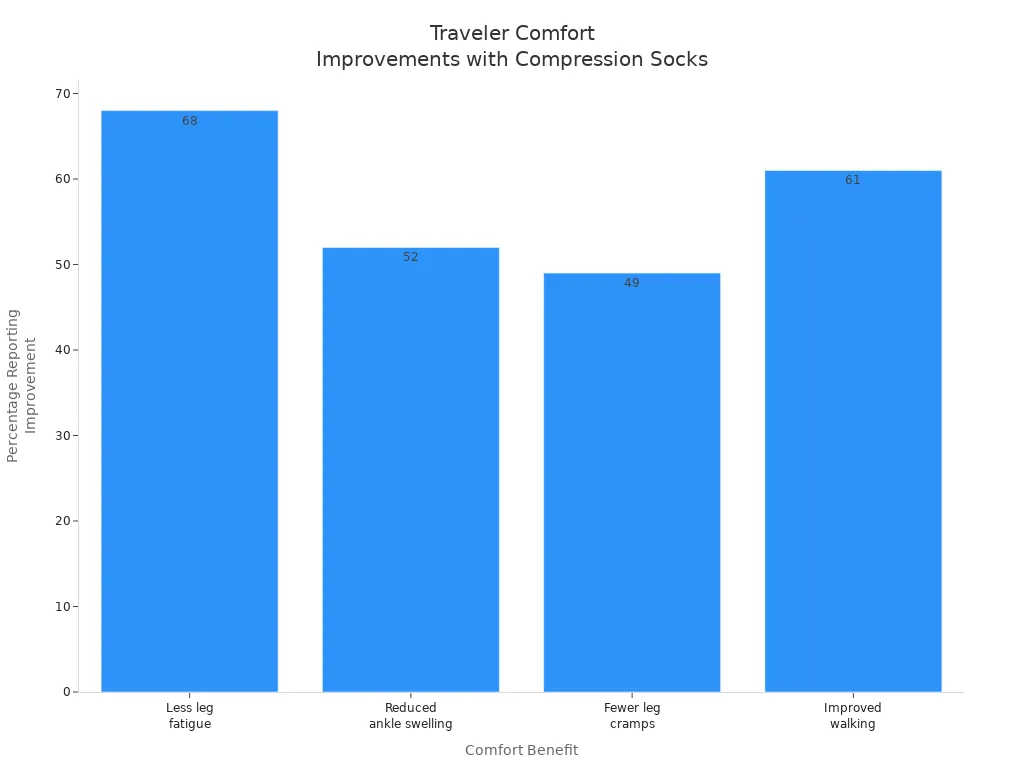
You want to feel your best when you travel. Compression socks for travel make you more comfortable and keep your legs healthy. They support your legs, stop tiredness, and help you walk better after a long flight. You avoid pain, cramps, and feeling tired. Compression socks for travel use special pressure to help blood move and keep your legs fresh.
Travelers notice the difference. Here is what people say when they use compression socks for travel:
|
Comfort Benefit |
|
|---|---|
|
Noticeably less leg fatigue |
68% |
|
Reduced ankle swelling |
52% |
|
Fewer mid-flight leg cramps |
49% |
|
Improved ability to walk comfortably |
61% |
Compression socks for travel also help stop varicose veins and other blood flow problems. You get support for your legs on a plane, in a car, or even at your desk. Even light compression socks for travel can work well. Doctors say all travelers should use them, not just people with health problems.
You can pick compression socks for travel to stop swelling, prevent DVT, and feel better. You will have less pain, more energy, and healthier legs. Make compression socks for travel part of your routine and enjoy every trip.
Choosing Compression Socks for Flying
Compression Levels
You want the right compression for your trip. Compression socks come in different levels, measured in mmHg. For travel, a compression level of 20-30 mmHg is usually best. This level gives strong support and helps prevent swelling and blood clots. If you are new to compression socks, you can start with 10-20 mmHg for mild support. For long-haul traveling, 20-30 mmHg works well to lower your risk of DVT by about 90%. People with severe swelling may need 30-40 mmHg, but you should ask your doctor first.
|
Efficacy Description |
|
|---|---|
|
10-20 |
Mild compression, good for first-time users to prevent swelling and discomfort. |
|
20-30 |
Ideal for long flights, reduces DVT risk by about 90%. |
|
30-40 |
Medium compression, helps with severe edema and post-thrombotic syndrome. |
Tip: Always choose the compression level that matches your needs and comfort.
Fit and Material
You need a good fit for your compression socks to work. Socks should feel snug but not too tight. Measure your legs before you buy. Knee-high socks cover your whole calf and work best for flying. Make sure there are no wrinkles when you put them on. This helps keep your circulation strong and prevents problems.
The right material makes a big difference. Look for socks made from nylon, spandex, merino wool, or bamboo. These materials are tough, stretchy, and keep your feet dry. Merino wool and bamboo also wick away moisture, so your legs stay cool and comfortable during long distance travel.
|
Material |
Properties |
|---|---|
|
Nylon |
Tough, soft, absorbent, slower to dry |
|
Polyester |
Tough, soft, dries faster than nylon |
|
Spandex/Elastane |
Stretchy, gives a snug fit |
|
Merino Wool |
Lightweight, breathable, moisture-wicking |
|
Bamboo |
Stretchy, durable, moisture-wicking |
Tips for Travelers
You want to get the most from your compression socks for flying. Put them on before your flight, when your legs are least swollen. Wear them during the whole trip, especially on flights longer than four hours. Take them off after you land. Stay hydrated to help your circulation. If you have health concerns, talk to your doctor before you fly.
-
Wear compression socks early for best results.
-
Make sure they fit snugly, not tightly.
-
Choose breathable materials for comfort.
-
Use graduated compression therapy for better blood flow.
-
Consult a healthcare provider for personal advice.
Wearing compression socks during travel acts like a mini workout for your legs. You keep your blood moving, reduce swelling, and lower your risk of blood clots. Make compression socks part of your travel routine for safer, more comfortable trips.
You want your trips to be simple and safe. Compression socks help you in many ways:
-
They lower swelling and pain on flights.
-
They help blood move better and lower DVT risk.
-
They fight tiredness, so you feel good when you land.
-
They give your legs support for more comfort.
|
Benefit |
How It Helps You When Traveling |
|---|---|
|
Lowers DVT risk and makes you feel better |
|
|
Reduced Discomfort |
Less tiredness and pain, so trips are more fun |
|
Enhanced Overall Comfort |
Makes long trips easier and more comfortable |
Pick compression socks for your next trip. You will keep your legs safe and feel much better.
FAQ
How long should you wear compression socks during a flight?
You should wear them for the entire flight. Put them on before you board. Take them off after you land. This keeps your legs healthy and comfortable.
Can you wear compression socks every day?
Yes, you can wear them daily. Many people use them at work, while traveling, or during long periods of sitting. You get the best results with regular use.
Who should avoid compression socks?
People with severe artery disease or open wounds should not use them. If you have health concerns, ask your doctor before wearing compression socks.
Do compression socks help with leg pain?
You feel less pain and tiredness when you wear them. They improve blood flow and reduce swelling. Many travelers say their legs feel better after using them.
How do you wash compression socks?
-
Turn them inside out.
-
Wash in cold water by hand or on a gentle cycle.
-
Air dry them flat.
This keeps your socks stretchy and comfortable.